Signalment
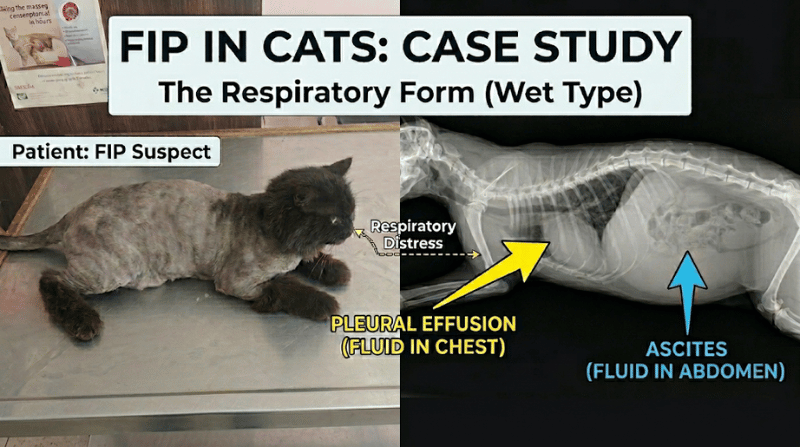
A male cat named Panther was presented to the clinic at about 3.5 years old. His chest was heavy with laboured sound, indicating a respiratory emergency.
History
When the Panther was presented at the clinic, it was breathing heavily with a wheezing sound. According to the owner, the Panther has been off-feed for the last 24 hours. He was profoundly lethargic and was unable to move at all. He had only consumed a few sips of milk about 24 hours ago. His energy and health were radically declining, and his breathing was getting heavier and more desperate.
Diagnosis
Firstly, based on the clinical signs, the initial diagnosis was that it was a case of respiratory distress, but later on, a radiograph of the lungs was performed, which confirmed it as a FIP: respiratory form.
Here are the symptoms that were initially noted,
- The temperature was hypothermic (91 F), which indicates Panther was in severe shock.
- Pale gums, a diagnostic sign of anaemia, were also observed, indicating reduced oxygen transport.
- Pulmonary oedema.
- A muffled lung sound was also noted on stethoscope auscultation.
- Tachycardia.
- Tachypnea (rapid, shallow, and muffled gasps).
Radiographic confirmation of FIP (feline infectious peritonitis) was made. It was named “wet form” or “Respiratory form” due to swollen and fluid filled abdomin. The main cause of FIP is Coronavirus (mutated form) that triggers an inflammatory response, causing the leakage of fluid directly into the lungs.
Treatment
When lungs are compromised, every second counts. This is the main protocol of treatment that was followed,
- Slow intravenous (IV) administration of a bronchodilator, in a carefully calculated dosage according to his body weight. Its purpose was to dilate the airways and help Panther breathe smoothly.
- Nutritional and warm fluid therapy were administered, helping raise the temperature and provide cellular energy.
- IV course of antiviral medication was started when the vitals of Panther were normalised,
Conclusion
After 5 days of antiviral medication, Pather’s condition greatly improved. One week of further intensive care enabled the Panther to live a healthy, peaceful life again.