You’ve likely heard it dozens of times — the popular claim that a dog’s mouth is cleaner than a human’s. It sounds oddly convincing, especially after your dog enthusiastically licks your face. But is there any science behind it? Spoiler: not quite. This veterinary deep-dive unpacks the research, the bacteria, the real risks, and what it all means for you and your pet.
🦠The Numbers: How Many Bacteria Are We Talking?
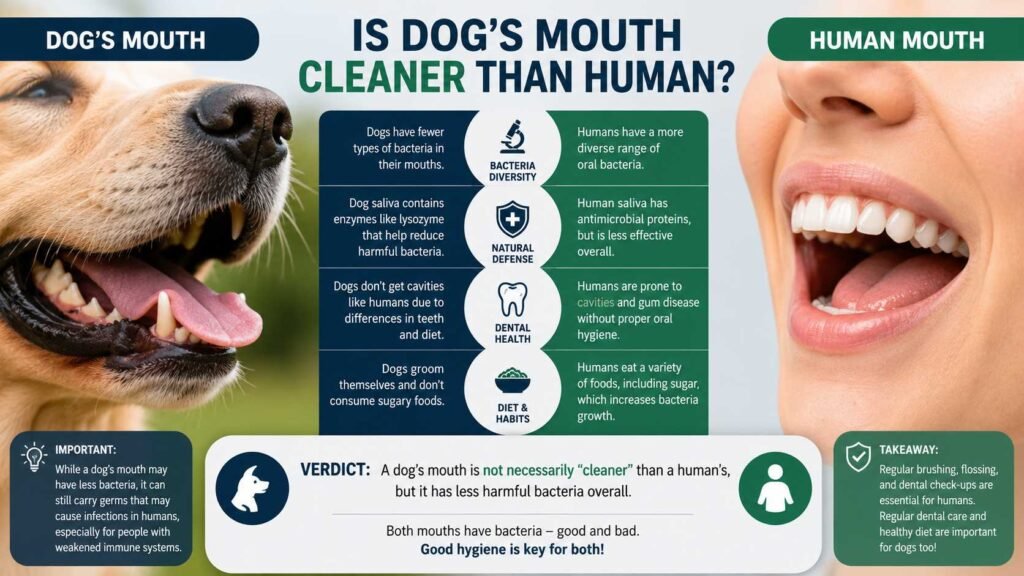
Both human and canine mouths are teeming microbial communities. The total bacterial count is strikingly similar — what differs is the type. A landmark 2022 study published in the American Journal of Veterinary Research identified 714 bacterial species across 177 families in dog oral samples. The NIH reports around 700 species in the human mouth.
The takeaway from these numbers: volume alone doesn’t define cleanliness. A 2012 study led by oral geneticist Floyd Dewhirst found only 16.4% overlap between canine and human oral bacteria — meaning the vast majority of microbes are species-specific.
📊Oral Microbiome Composition Compared
🔄The 16.4% Overlap — What It Really Means
🧫Key Bacteria Found in Dog Mouths
| Bacterium | Prevalence in Dogs | Zoonotic Risk | Potential Human Effect |
|---|---|---|---|
| Porphyromonas gulae | Very High | Moderate | Periodontal disease, systemic inflammation |
| Pasteurella multocida | High | High | Wound infections post-bite or lick |
| Capnocytophaga canimorsus | Moderate | High | Rare but potentially fatal in immunocompromised |
Important: Between 10–15% of dog bites become infected, according to National Geographic. Open skin is a direct pathway for oral bacteria to enter the bloodstream.
💭Why Did This Myth Start?
Species-Specific Bacteria
Most canine bacteria can’t infect humans because they’re not zoonotic. Dogs and humans rarely swap diseases through saliva.
Antimicrobial Enzymes
Dog saliva contains lysozyme and peroxidase enzymes that inhibit certain bacteria.
Dental Caries Are Rare
Only ~5% of dogs develop dental caries vs ~90% of humans. Dogs’ salivary pH and diet reduce acid formation.
❓Frequently Asked Questions
Can I get sick from my dog licking my face? ▾
Does dog saliva have healing properties? ▾
How should I clean my dog’s teeth at home? ▾
🐾 Key Takeaways
- Dog and human mouths both harbour ~600–700 bacterial species.
- Only 16.4% of oral bacteria is shared between dogs and humans; the rest is species-specific.
- Dog mouths are not dirtier or cleaner — they are simply different ecological environments.
- Regular dental hygiene for your dog reduces bacterial load and protects both pet and owner.
American Journal of Veterinary Research (2022) | Harvard/Floyd Dewhirst (2012) | PMC/PLOS One (2015) | Eulji University & NRF Korea (2024) | NC State University (2023) | NIH National Library of Medicine.