
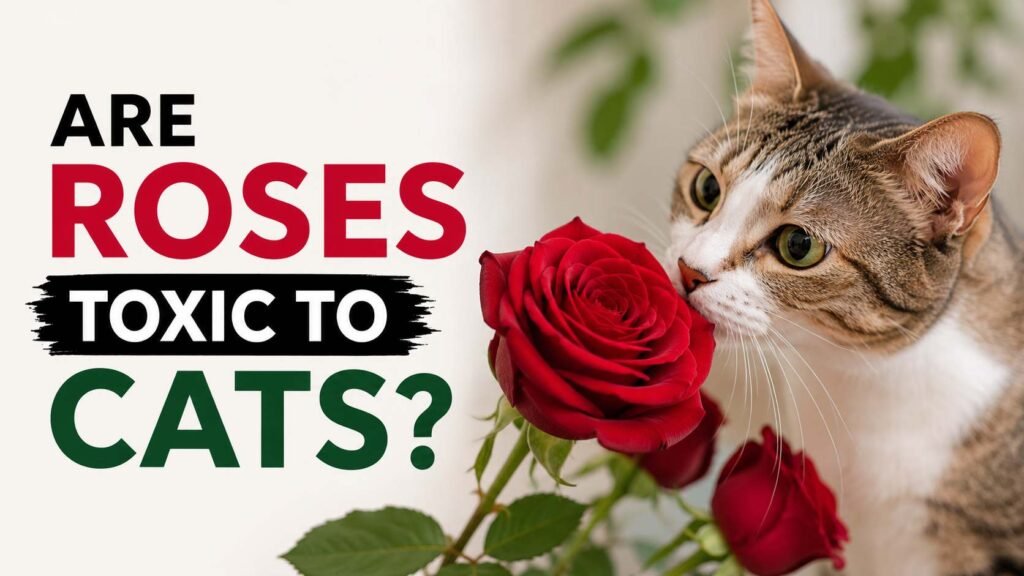
If you keep roses at home and share your space with a curious cat, the question “are roses toxic to cats” deserves a thorough answer before the next bouquet arrives. The reassuring bottom line — confirmed by the ASPCA Animal Poison Control Center — is that true roses (Rosa spp.) are non-toxic to cats. That said, “non-toxic” and “completely harmless” are not identical. Thorns, pesticide residue, vase water chemicals, and dangerously misnamed lookalike plants all carry real risks every cat owner must understand.
What Happens If a Cat Eats Roses?
Cats are obligate carnivores. Their digestive systems are engineered for meat, not plant cellulose. When a cat chews rose petals, leaves, or stems, the plant matter moves through a gut wholly unprepared for it. The result is usually mild and brief: a bout of vomiting — sometimes containing visible petal fragments — loose stools, or a temporary dip in appetite. PetMD veterinary experts confirm these symptoms typically resolve within 24 hours without medical intervention.
Roses contain no alkaloids, glycosides, or compounds linked to organ failure in cats. This classification is rooted in decades of real-world data from the ASPCA Poison Control Center, which processes over 180,000 pet poisoning calls annually. If vomiting persists beyond 48 hours, or a thorn was swallowed, a vet visit is advised to rule out internal injury.
The Real Dangers: What Is Actually Harmful
While rose plants are safe for cats, three connected hazards demand attention. These are the things that land cats in emergency clinics — not the rose itself.
1. Thorn Injuries
A case detailed in veterinary literature describes a cat named Biscuit brought in with an abscessed paw — a rose thorn had embedded between his toe pads three days after his owner received a bouquet. By discovery, infection had already taken hold. Thorn injuries can lacerate the mouth lining, throat, or digestive tract when swallowed. Always strip thorns before bringing cut roses indoors.
2. Pesticides, Fertilisers & Flower Food
Cut flowers sold in stores are treated with preservative chemicals to extend freshness. These compounds persist on petals and stems, and leach into vase water. Greycoat Research documented a cat that developed acute kidney injury after nibbling store-bought rose petals and drinking from the vase. Cats have low UGT liver detoxification enzyme levels, making them far more vulnerable to chemical exposure than dogs or humans.
Dangerous “Rose” Lookalikes That Are Truly Toxic to Cats
True Rose vs Desert Rose — Know the Difference
One of the most dangerous misconceptions in feline care is assuming any plant with “rose” in its name is safe. Several unrelated plants carry the label but belong to entirely different botanical families — and some carry compounds that can kill a cat. PetMD’s veterinary team explicitly highlights these species in their cat poisoning guides.
| Common Name | Scientific Name | Toxicity | Toxic Compound | Symptoms in Cats |
|---|---|---|---|---|
| True Rose | Rosa spp. | Non-Toxic | None | Mild GI upset from plant fiber only |
| Desert Rose | Adenium obesum | Deadly | Cardiac glycosides | Vomiting, heart arrhythmia, potential death |
| Christmas / Lenten Rose | Helleborus niger | Severe | Hellebrin, bufadienolides | Vomiting, lethargy, cardiac effects |
| Moss Rose | Portulaca oleracea | Moderate | Soluble oxalates | Vomiting, tremors, lethargy |
| Rosebay / Oleander | Nerium oleander | Deadly | Grayanotoxins | Heart failure, tremors — small amounts fatal |
| Primrose | Primula vulgaris | Mild–Moderate | Primrose saponins | GI upset, skin irritation |
Are Roses Toxic to Cats — The Research Numbers
How Rose-Related Cat Incidents Break Down
Based on reported cat–rose incident categories from veterinary literature and poison control data.
Are All Rose Varieties Safe for Cats?
Among the roughly 150 natural Rosa species and thousands of cultivated hybrids, all are non-toxic to cats, dogs, and horses according to ASPCA toxicology data. Whether your cat encounters a garden hybrid tea, a wild hedgerow rose, or a florist’s spray rose, the botanical classification — not the visual appearance — determines safety.
| Rose Variety | Common Setting | Safe for Cats? | Extra Precautions |
|---|---|---|---|
| Hybrid Tea Rose | Garden, bouquets | Safe | Check for pesticides on cut stems |
| Floribunda Rose | Garden beds | Safe | Thorns present — de-thorn near cat access |
| Climbing Rose | Garden walls, fences | Safe | Cats may climb — more thorn exposure |
| Miniature Rose | Indoors, windowsills | Safe | Easily accessible — keep soil pesticide-free |
| Wild / Dog Rose (Rosa canina) | Hedgerows, gardens | Safe | Dense thorns — physical injury possible |
| Spray Rose | Florist bouquets | Caution | High chemical treatment — wash stems thoroughly |
| Rose Hip (fruit of Rosa) | Teas, gardens | Safe | Non-toxic; seeds may cause mild upset if eaten in bulk |
What To Do If Your Cat Eats a Rose
Stay calm. If you confirm the plant is a true Rosa species with no chemical treatment, you are unlikely to face an emergency. Follow these steps. For a broader look at plants your cat may encounter indoors and outdoors, our guide on wild violets and cats covers related feline plant-safety principles. Browse Vetiana’s Health & Wellness category for more clinically reviewed guides.
Verify it is a true Rosa variety — not a Desert Rose, Christmas Rose, or other lookalike. Check the scientific name if uncertain.
Inspect your cat’s paws, mouth, and gums for embedded thorns or puncture wounds. Abscesses develop within 48–72 hours if thorns remain.
Were these florist roses or garden roses treated with pesticides? If chemical exposure is possible, call your vet rather than waiting for symptoms to appear.
For untreated true roses, watch for vomiting, diarrhea, or appetite change. Mild symptoms self-resolve. Persistent or severe signs need veterinary attention.
Pet Poison Helpline: 855-764-7661 | ASPCA Animal Poison Control: 888-426-4435 | Your nearest emergency vet.
How To Keep Cats Safe Around Roses
You do not have to choose between roses and your cat. A few practical steps reduce all risks to near zero. The most impactful — confirmed by veterinary toxicologists — is checking every single plant in a mixed bouquet, since roses often arrive alongside lilies.
Cat-Safe Flower Alternatives to Roses
If you want a completely worry-free home, these ASPCA-verified non-toxic flowers are safe for cats and make excellent alternatives or companion plants in arrangements.
Roses vs Common Household Flowers — Cat Safety At a Glance
| Flower | ASPCA Status | Risk to Cats | Key Concern |
|---|---|---|---|
| 🌹 True Rose (Rosa) | Non-Toxic | Very Low | Thorns & pesticides (not the plant) |
| 🌷 Lily (Lilium) | Toxic | Fatal | Kidney failure — even pollen is dangerous |
| 🌷 Tulip | Toxic | Moderate–High | Lycorine alkaloids, bulbs most toxic |
| 💐 Daffodil | Toxic | High | Lycorine — bulbs especially dangerous |
| 🌸 Orchid | Non-Toxic | None | Completely safe |
| 🌺 Azalea | Toxic | High | Grayanotoxins — vomiting, weakness, heart issues |
| 🌼 Sunflower | Non-Toxic | None | Completely safe |
| 🪷 Hydrangea | Toxic | Moderate | Cyanogenic glycosides |