
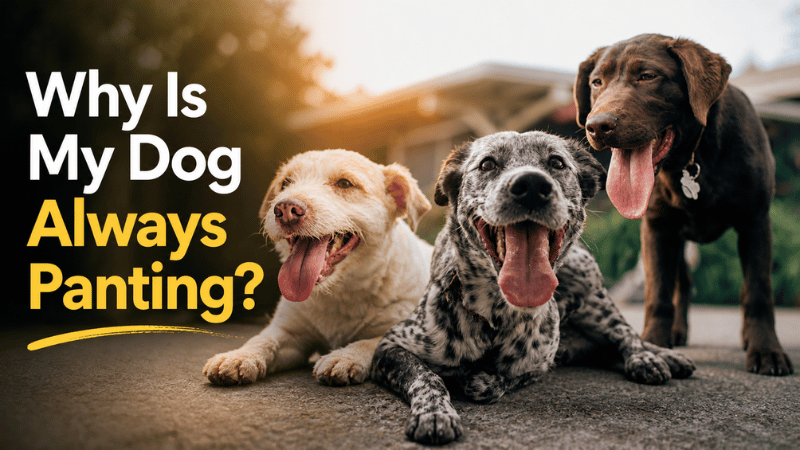
Your dog is snoozing peacefully at night, but suddenly you hear it panting heavily. This is what most pet owners are worried about. This article will give you detailed guidance on what to do if your dog is panting heavily at night and how to distinguish normal panting from dangerous panting.
Compared to humans, dogs have very few sweat glands, which is why they always sweat more to keep themselves cool in warmer environments. It’s a biological process in which dogs often open their mouth and breathe heavily, which indicates their body temperature, and it’s a totally normal process. Medically, this condition is thermoregulatory panting.
This condition worsens at night because the ambient temperature is cooler, which logically should not be happening. If the temperature is normal and the dog is still panting, then this is the first sign to worry about.
This is concerning when painting at night in cooler temperatures, followed by pacing, whining, or an inability to settle. This is usually different from normal; it is louder and raspier.
While resting, 15 to 35 breaths per minute is considered normal; however, any value above 40 breaths per minute could be dangerous and concerning. In this article, I will explain when to be concerned and when it is normal, and provide a step-by-step guide on what you can do if the situation gets worse.
Research Data & Statistics
Cushing’s disease (hyperadrenocorticism) affects 0.2% of the dog population, most commonly after age 6, and is the most common cause of heavy breathing in senior dogs. However, canine anxiety disorder affects 20 to 25% of the dog population, especially domestic dogs, and heavy breathing accompanied by panting is the sign of dog anxiety.
The other cause is pain-induced panting, which is easy to miss because most dogs mask it during the daytime and are distracted by other activities; however, at night, it is more apparent. This is based on clinical data from 2024 to 2025 reported by the most qualified veterinarians.
Key facts,
- 40% of the dogs have to face anxiety-driven panting.
- 1 in 3 senior dogs shows canine cognitive dysfunction that heavily affects their breathing pattern.
- Respiratory distress is the #1 reason why dog owners visit a veterinarian at night.
Causes Of Dog Panting At Night
The following are the causes of dog panting at night. I have mentioned the exact causes of their symptoms, which are emergencies and require seeing a doctor as soon as possible, along with the normal causes that should be monitored; there is no need to go to an emergency department.
Heatstroke
Heart Disease
Respiratory Disease
Cushing’s Disease
Pain or Discomfort
Canine Cognitive Dysfunction
Anxiety & Stress
Environmental Temperature
Medication Side Effects
Dreaming (REM Sleep)
Breeds At Most Risk
Some dog breeds are at the highest risk of heavy panting at night. This is due to an anatomical or genetic predisposition that causes them to breathe heavily, usually at night.
What You Can Do At Home
Once the veterinarian has ruled out the main cause of heavy breathing, there are a few things that you can do to comfort your dog at nighttime. This heavily depends upon the cause of heavy breathing or panting. The following is a brief on how to comfort your dog.
Temperature-Related Panting
- Place your dog in the proper cool room.
- Arrange a fan or an air-conditioner directed toward your dog, not directly, but at the sleeping place.
- Don’t exercise your dog about 2 hours before bedtime.
Anxiety-Related Panting
- Make a consistent bedtime routine.
- Provide a “den” where it feels safe.
- Use a calming supplement or anti-anxiety medication, as recommended by your vet.
Pain-Related Panting
- Use memory foam to lower pressure on joints.
- Follow a pain management plan prescribed by your vet.
- Maintain a healthy weight with a proper diet plan with your vet.
Conclusion
Before panicking, reach out to your mat. It’s important that you find the exact cause yourself using the signs and symptoms I described above. Reading this article carefully can improve your pet’s lifespan and help you avoid emergencies.