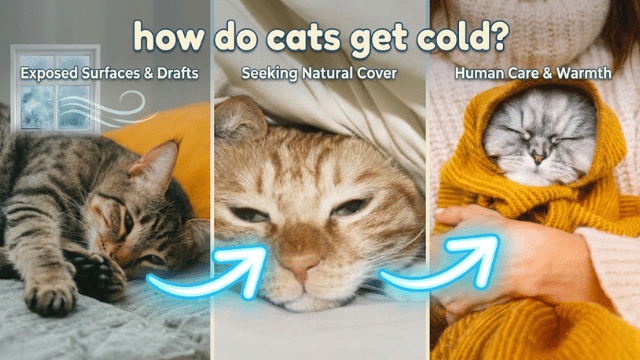
How do cats get cold? Let’s explain this in detail. There is a medical term called hypothermia, a condition in which the body temperature falls outside the normal range. In cats, the normal body temperature is 100-102.5°F. If your cat’s body temperature is below this range, it will show signs of cold. This condition can be alarming and dangerous if the temperature reaches 95°F or higher. Still, in most cases, cats can fully recover if they are treated properly and receive good preventive care.
If your cat is trying to find a warm spot, this could be a sign of this condition, and in this stage, it can be treated by keeping your cat at home and away from dry, cold places. However, if your cat shows any of the following signs, it is a medical emergency, and you must consult a veterinarian.
Early Signs
Here are the early signs of Hypothermia,
- Shivering (stops if the case gets worse)
- Cold paws and ears.
- Weeknes
- Shallow Breathing
- Pale gums
- Loss of coordination (lethargy)
Severe Signs
If you have a cat or a dog, you must have a thermometer at home to regularly monitor its temperature. In case of severe Hypothermia, the cat shows the following signs,
- Low heart rate
- Heavy/shallow breathing
- Unconciousness
- Collapsing
If you see any of the above signs, it’s a case of severe medical emergency. In this situation, consult a nearby veterinarian as soon as possible.
Why Do Cats Get Cold?
The reason you get cold could be due to any environmental factor; the primary cause is a non-environmental factor; the secondary cause is due to any chronic illness or medical condition; or due to anaesthesia.
Environmental Factors
- Prolonged exposure to outside cold (below 7°C)
- Accident exposure
- Wet bedding or environment
Non-environmental Factors
Other reasons your cat may be getting cold include chronic kidney disease and anesthesia. In newborn kittens or senior cats, the body is unable to regulate body temperature due to kidney issues, which can lead to Hypothermia.
In post-operative care of anaesthesia, the body is unable to regulate the temperature properly, which could lead to Hypothermia, but with proper care, these conditions are manageable.
Other than this, the Hypothermia could be due to shock, heart disease, or peritonitis, mainly FIP.
First Aid/Veterinary Care
If you are at home, then your primary first aid for your car in case of Hypothermia should include these things,
- Dry your cat and move to a warm area
- Wrap it in a blanket.
- Give heat externally: fill the bottles with warm water, wrap a cloth around them, and place them near your pet to warm it.
In severe cases, visit the veterinarian. (Guide for vets only)
- Intravenous IV fluid therapy with warm fluid.
- Warm air/pads
- Warm water anema or warm the chest area
What Not To Do
If your cat is struggling with this condition, don’t do these things.
- Don’t place them near a direct heat source, like a heater.
- Don’t heat them rapidly, as it might lead your pet to shock.
Conclusion
This article provides a complete guide to caring for your pet if it gets cold, including proper veterinary care and at-home care. If you still have any questions, let me know in the comments. Thank you for your time.